SF Reference Room #SF-2026/01
“home theater rewoven”
The highest-fidelity place on the internet to watch and publish AI-generated cinema. Live today on the TsugiNode, a generational leap in streaming hardware that drives any modern 4K TV past what streaming and Blu-ray can carry.
Consumer displays have outrun the software that drives them. Modern 4K TVs handle smoother gradients, deeper color, and cleaner motion than the platforms ever ship to them. The services you watch on still send 8-bit 4:2:0 at commodity bitrates because that is what YouTube was calibrated for, more than a decade ago.
AI-generated video has different statistical properties from camera-captured footage. That compression destroys the subtle gradients, the temporal coherence, and the fine textural detail that defines whether an AI short looks like cinema or like slop.
We ship master-quality 4K to consumer TVs through the TsugiNode today, in a real customer's home. A generational leap in what a streaming set-top can carry. Visibly better on any modern 4K TV, reference-grade on premium panels. You can see it in person in San Francisco, or in your own home once you are in the alpha cohort.
The three filed US provisional patents below sit alongside each other as a portfolio bundle. Two are running on consumer silicon today; the third is the substrate for the long bet.
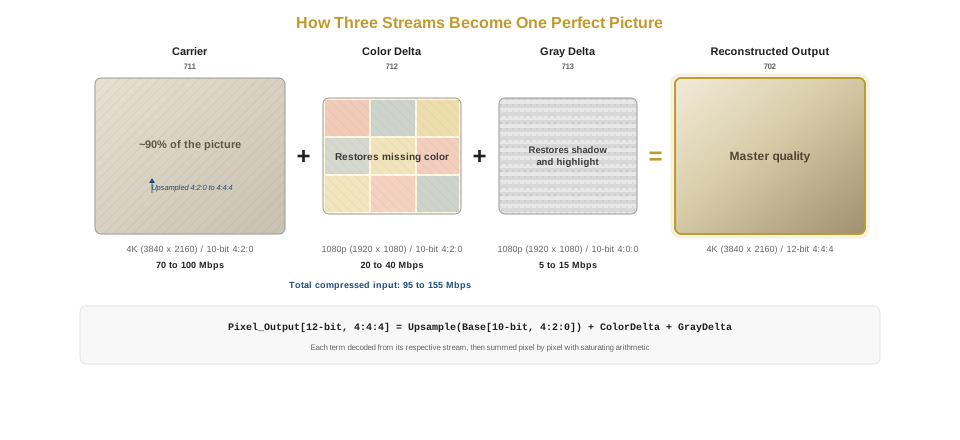
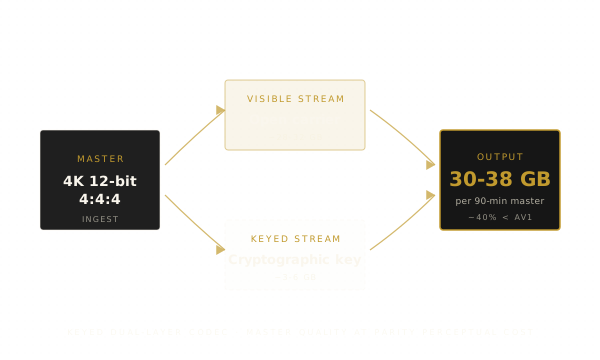
Master-quality 4K 12-bit 4:4:4 from a 30 to 38 GB file, approximately 40 percent smaller than AV1 at the same perceptual quality. Running on consumer silicon today.
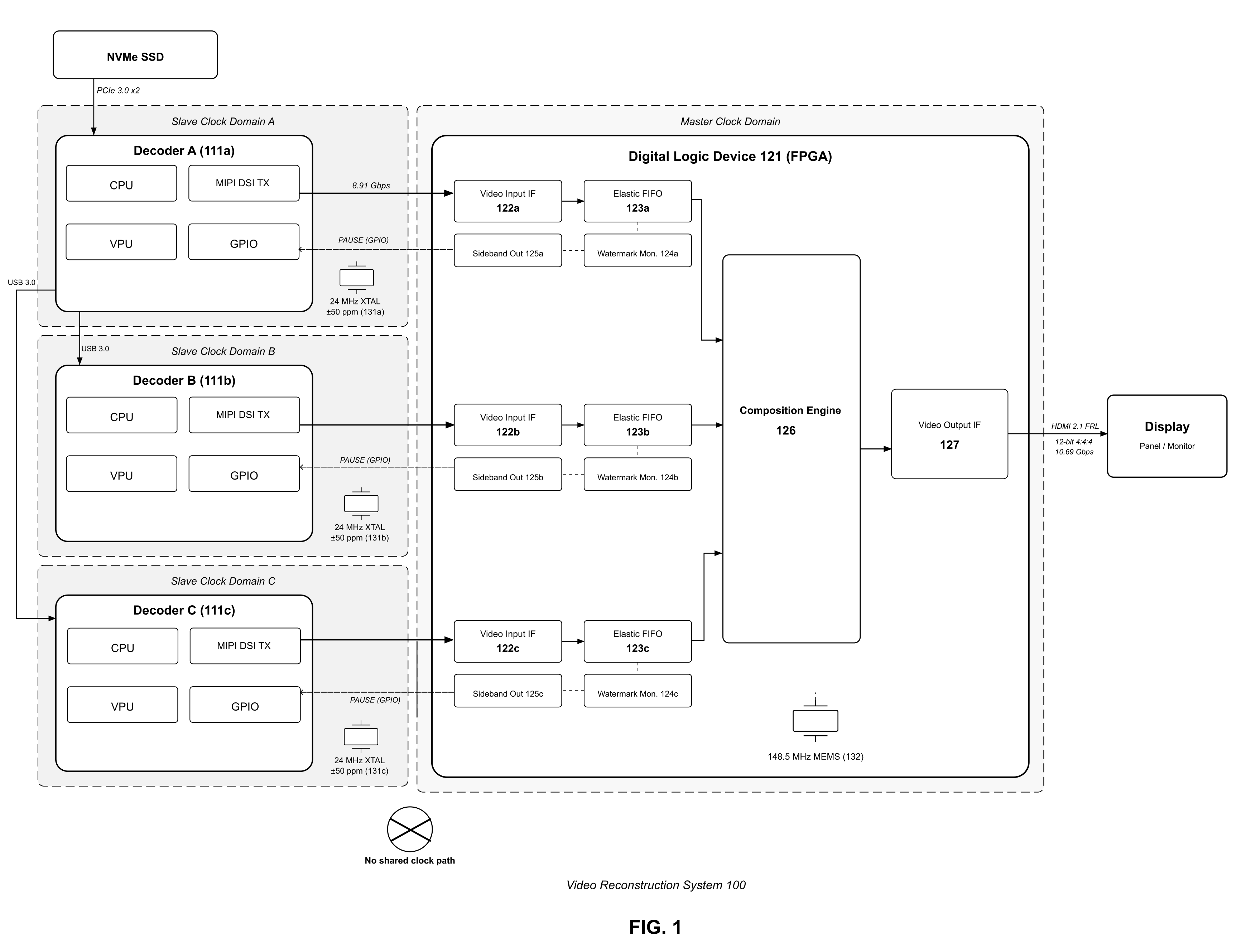
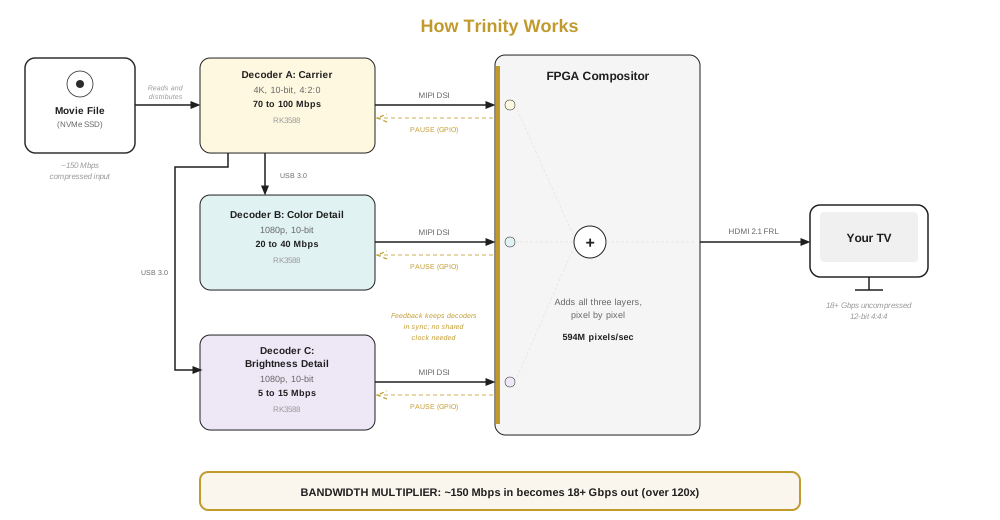
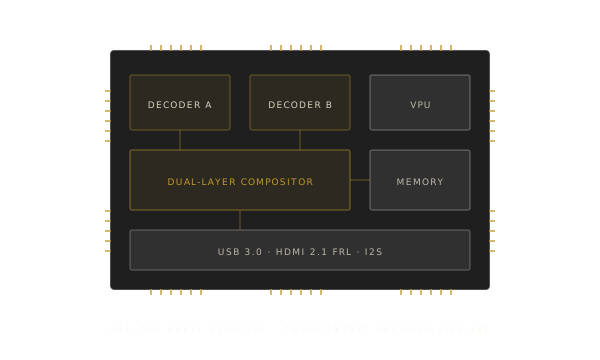
A multi-decoder synchronization fabric that joins two or three decoders, scanline aligned, to deliver 12-bit color from commodity 8-bit-per-decoder silicon. The Kintsugi seam, in hardware.
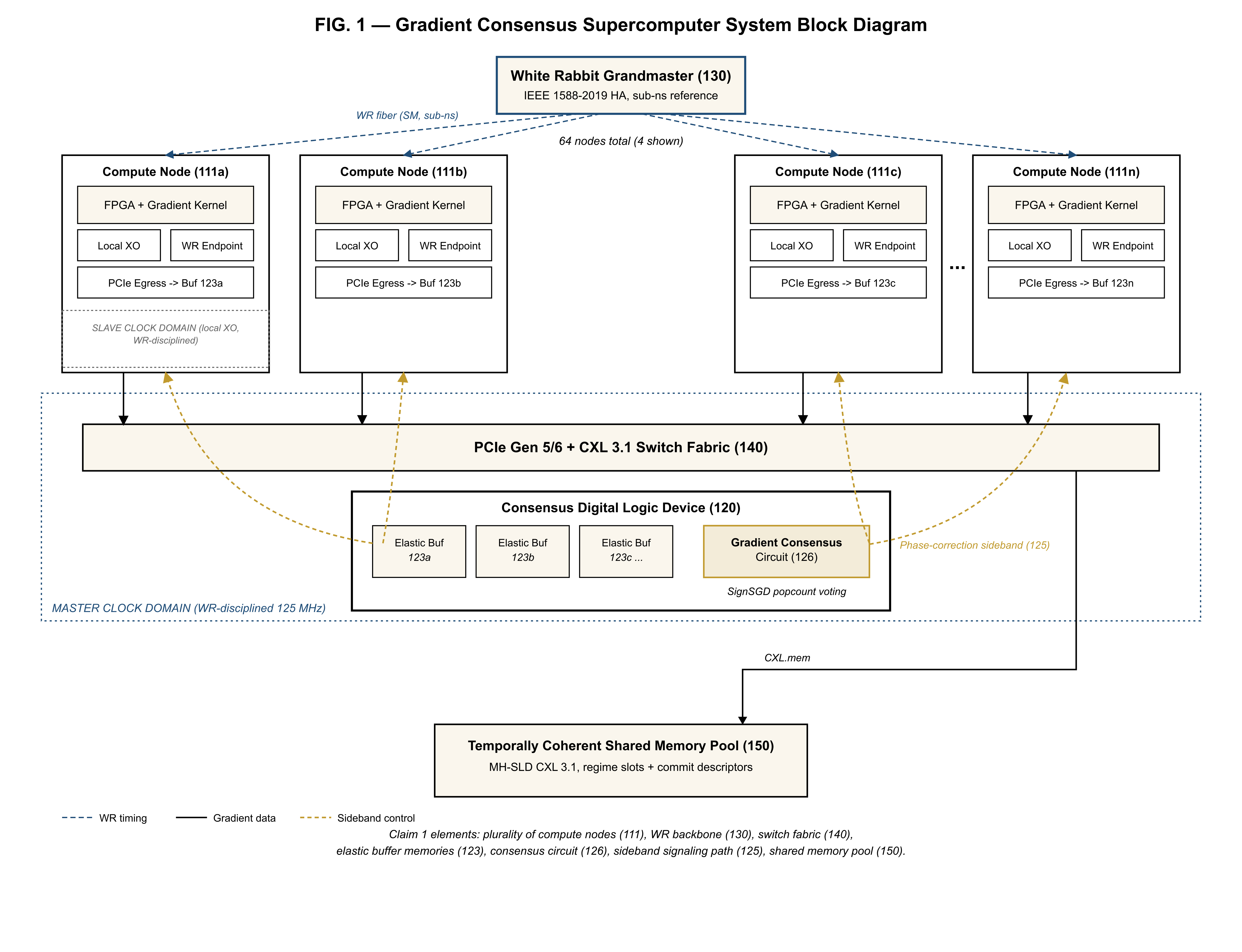
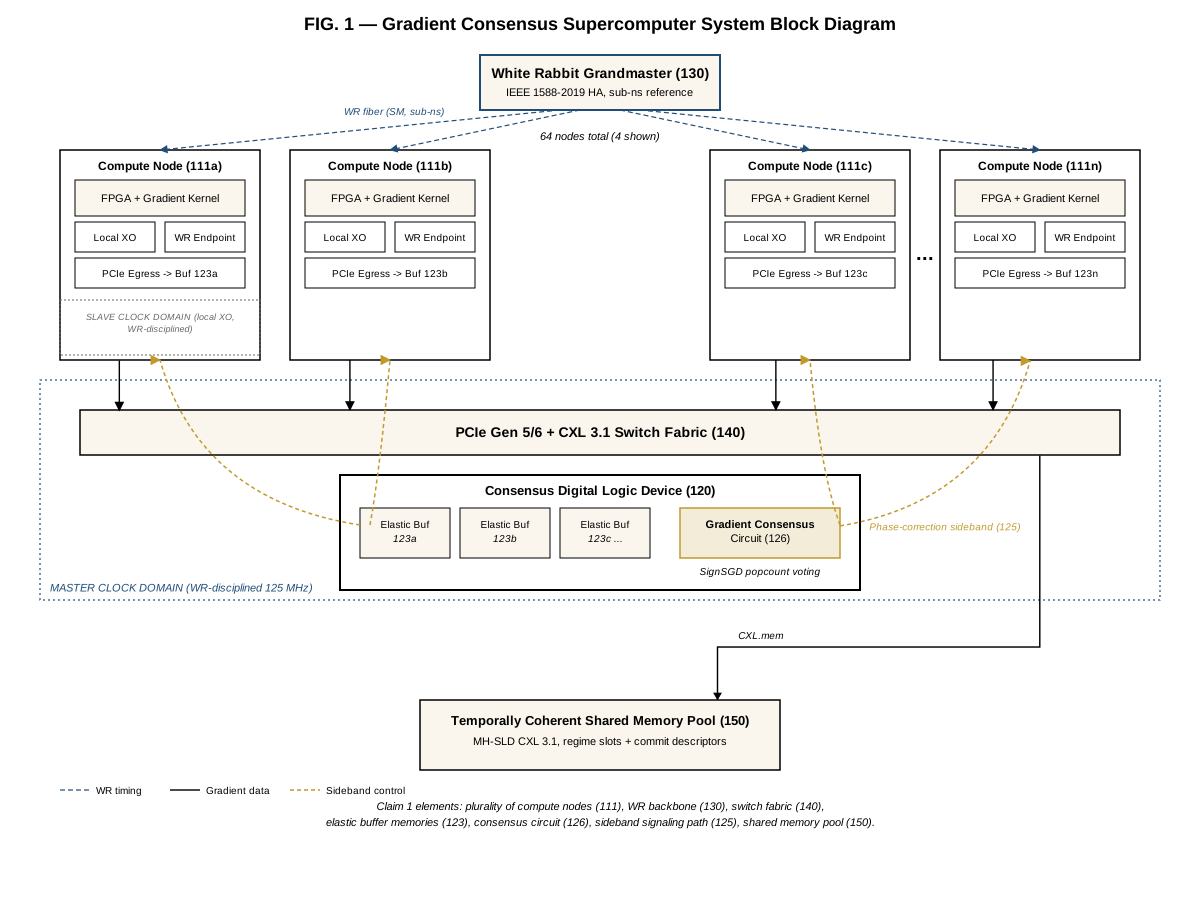
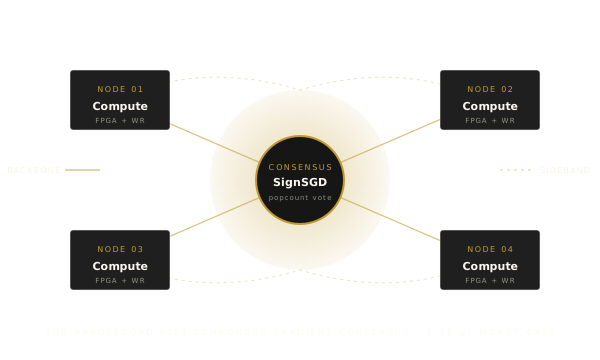
A sub-nanosecond gradient-consensus architecture for distributed AI training. Apparatus claims filed; software-analog validation across vision and large language model continual learning.
Specific claim language is counsel-protected. Strategic partners under NDA receive the full technical annex on request via partnerships@tsugicinema.com.
A vertically integrated stack from silicon to network to AI substrate. The patent portfolio below is independently externally validated. Specific claim language is counsel-protected; strategic partners under NDA receive the technical annex on request.
"Exceptionally well-positioned. Robustly novel. A non-obvious leap over the established visual-cryptography teaching."
"Structural ingenuity in the Sideband Flow Control Mechanism. An examiner would struggle to find a motivation to combine prior art."
"The strongest patentability posture in the portfolio. A profound architectural divergence from prior cross-domain references."
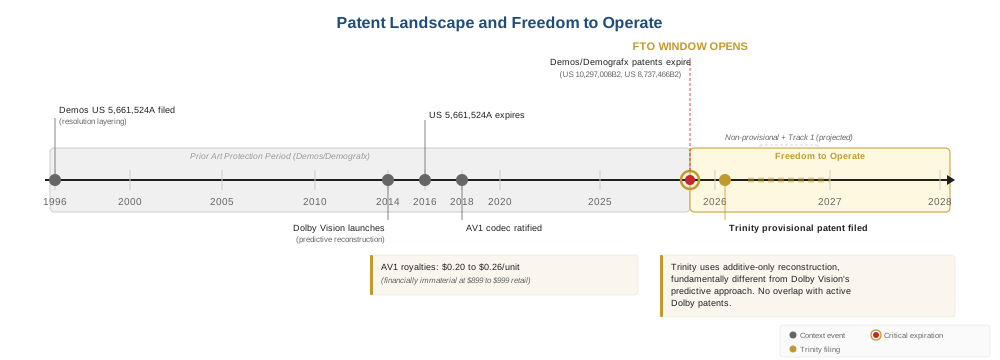
Demos and Demografx published the foundational resolution-layering patents in the 1990s. Those expire in 2026, opening a clean freedom-to-operate window. Trinity uses additive-only reconstruction, fundamentally different from Dolby Vision's predictive approach.
Off-the-shelf consumer SoC running a generational-leap pipeline. Two-context decoder driven by a custom dual-layer compression scheme. Trinity FPGA reference for 3-decoder scale.
Master-quality 4K 12-bit 4:4:4 ingest. Custom keyed compression with a cryptographically separated companion stream. 30 to 38 GB per 90-minute master. Approximately 40 percent smaller than AV1 at parity perceptual quality.
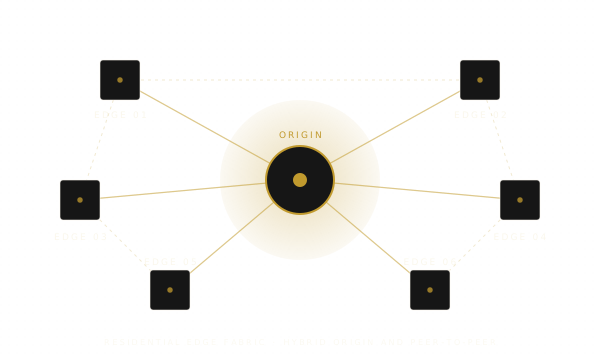
Residential edge nodes function as delivery peers, storage nodes, and (Phase 2) compute nodes. Hybrid origin and edge fabric. No crypto-speculation cold start.
Sub-nanosecond plesiochronous gradient consensus apparatus for distributed neural network training. Apparatus-claim provisional filed; software-analog continual-learning validation across vision and large language model workloads.
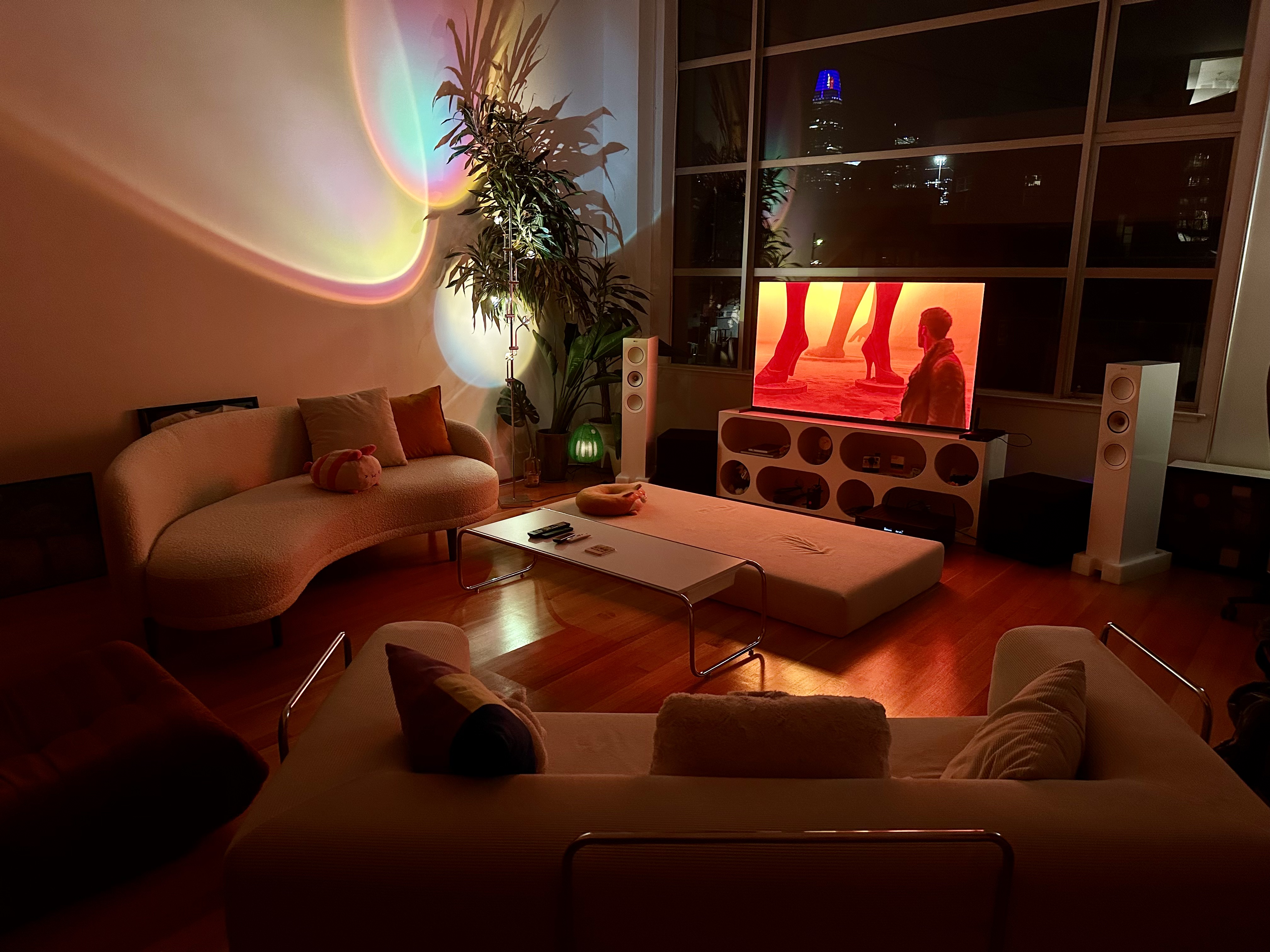
The dual-layer compression pipeline runs on off-the-shelf consumer silicon, driving a reference Sony Bravia 8 II in our San Francisco demo room. We can show you in person. Email partnerships@tsugicinema.com.
The TsugiNode reference design is consumer SoC today and ASIC tomorrow. The Duality pipeline is ready for SoC manufacturer integration. The Infinity gradient-consensus substrate is targeting the UALink Consortium track. If your roadmap intersects any of those, the door is open.
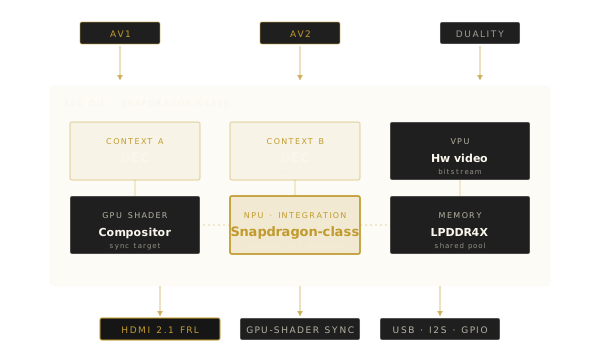
Snapdragon-class NPUs, AV1 / AV2 ecosystem, dual-decoder SoCs, GPU-shader sync. Reference-design walkthroughs and technical-annex packages available under NDA.
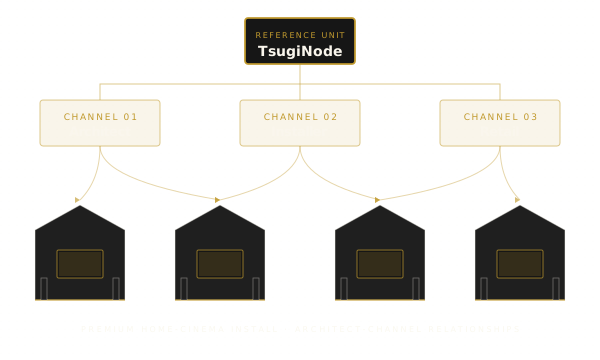
Premium home-cinema install channel. Cofounder Dylan brings architect-channel relationships from Apple flagship retail and Edge at Hudson Yards. We are quoting full rooms today.
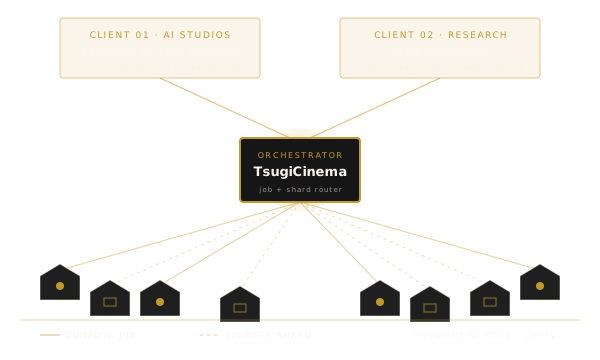
Selectively curated AI film studios for the platform. B2B compute for research workloads on the residential edge. Active interest from the computational biology research community.
Strategic-partner inbound is read directly by the founder. Technical annex, patent-portfolio detail, and reference-room demo offer follow under NDA.
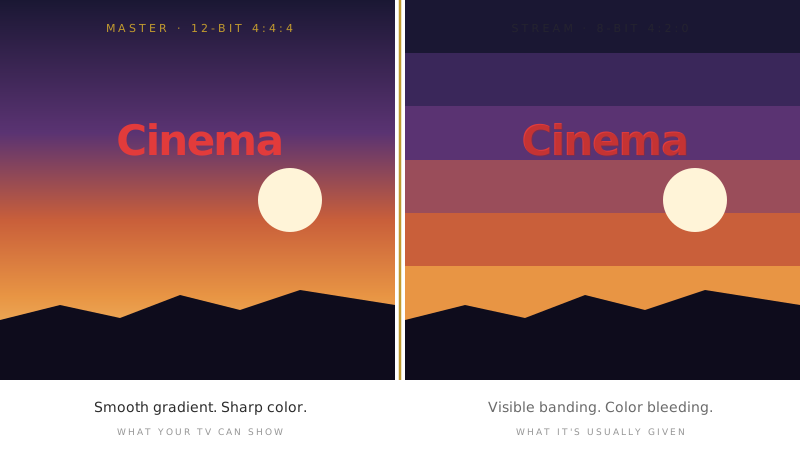
Our dual-layer pipeline ships exactly what your hardware can show. Cleaner color, smoother gradients, and lower compression noise are visible on any modern 4K TV. The headline number (12-bit 4:4:4) is unlocked on reference-grade panels. The advantage disappears once it gets re-compressed by YouTube, so the honest test is on the box itself.
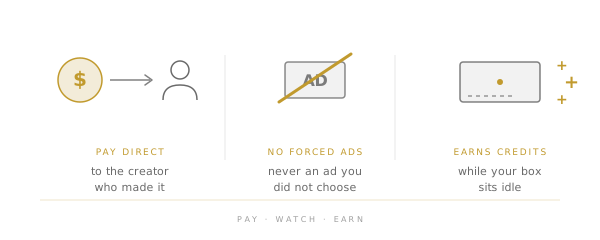
You made something that looks like what you rendered. Why does the rest of the internet make it look like something else? TsugiCinema ships your master at master quality. You set the price. Your superfans know exactly what they are paying for.
Human creators are held in the highest esteem. AI studios are selectively curated to a published quality bar.
Every video on TsugiCinema clears a published quality threshold. Specific, measurable, documented. No other platform commits to that.
Pre-roll, mid-roll, post-roll, interstitial: all forbidden. Forever. Display ads on browse pages only, clearly labeled, never on the page where you are watching.
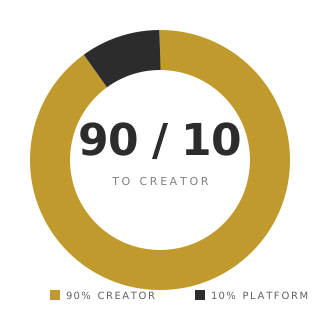
No platform subscription. No paid tier to remove ads (there are none to remove). Creators set their own prices. You know exactly what you are paying for.
"When viewers think a creator's price is too high, the outrage is at the creator, not at the platform. That is the correct architecture."
Every TsugiNode in a home is also a delivery peer, a storage node, and eventually a compute node. Operators choose which artists, studios, and research customers receive their spare compute. The platform does not capture that decision.
Large private AI is consolidating compute into a small number of data centers. There is an alternative architecture that scales residential, on the margin that matters: power, cooling, latency to the user, and consumer agency.
This is the scalable answer to data-center-bound AI infrastructure, and it is the reason the same hardware that drives your TV can also fund an open, consumer-owned compute grid.
Edge CDN. Reduces origin egress and improves last-mile latency.
Operator-controlled cache. Gifted unlocks, master-quality preloads.
Spare cycles for AI inference. Operator chooses which jobs run.
Research, studio, biology workloads. Active interest from the computational biology research community.

Hardware architecture, FPGA and ROM engineering, dual-layer compression. Sole inventor on the three filed US provisional patents. Previously at Google Search.

Operations, GTM via the home-cinema install channel, audio engineering. Architect-channel relationships through prior work on Apple flagship retail and Edge at Hudson Yards.

Three decades of governance, strategic planning, and copyright clearance experience. Money-transmitter regulatory analysis and Phase 3 studio licensing governance.
Strategic-partner conversations and named technical advisors disclosed under NDA. See about for the company story and the Kintsugi origin.
Tell us who you are. We will be in touch.
Send a short note to the address that fits you best. We read every email.
Strategic-partner inbound is read directly by the founder. We respond within a few business days.