Your TV can show much more
than the internet sends it.
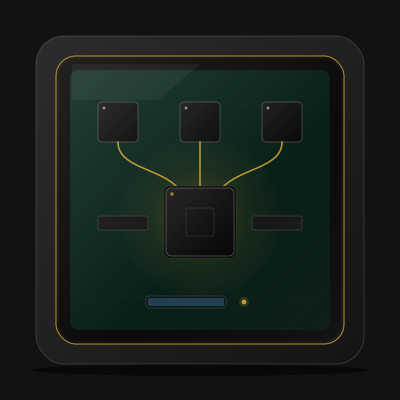
Consumer displays have outrun the software that drives them. We ship master-quality 4K through the TsugiNode, a generational leap in streaming hardware, driving any modern TV in a real customer's home today. This page is the plain-language version of how, and why it matters.
A 90-minute 4K master is
2.1 terabytes uncompressed.
Streaming services do not ship that. They cannot. So they compress. The question is how much, and how well.
Most platforms ship 8-bit color at 4:2:0 chroma, at bitrates calibrated more than a decade ago for the average broadband connection of the time. Your TV can resolve smoother gradients, deeper color, and finer texture than that signal carries. The difference is not subtle once you have seen it.
Our dual-layer pipeline ships the same 90-minute master as a 30 to 38 GB file: master-quality delivery at a fraction of the bitrate the full master would otherwise require. Patent pending, running on consumer silicon.
Two numbers that decide
whether a frame looks real.
Smooth gradients,
no banding.
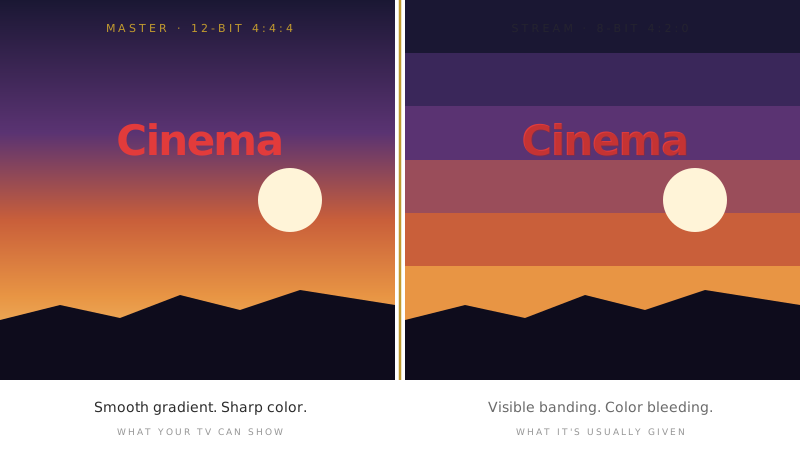
Eight-bit color gives a gradient 256 steps. Twelve-bit gives 4,096. A sunset rendered in 8 bits has visible stair-stepping in the sky on a modern panel. The same sunset in 12 bits is continuous. The hardware in your TV is already 10 to 12-bit native. The signal is the bottleneck.
Edges hold,
color stays where it belongs.
4:2:0, the streaming default, throws away three quarters of the color information by assumption. It saves bandwidth. It costs sharp red titles, neon signage, the saturated edges in painterly cinematography, and the high-frequency color detail that camera-captured and AI-rendered sources alike depend on.
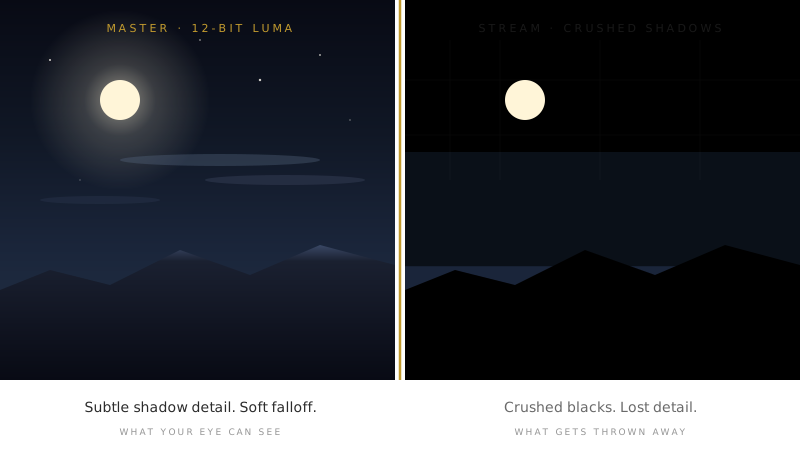
Codecs tuned for commodity streaming destroy the subtle gradients, temporal coherence, and fine textural detail that decide whether content looks like cinema or like slop. That is true whether the source is a camera-captured film, a hand-painted animation, or an AI-rendered short. Our compression is built for all of them.
From our origin
to your panel.
Master ingest
Pristine creator master, no rips. Held above a published fidelity floor.
Dual-layer encode
Base layer plus an enhancement layer. 4K 12-bit 4:4:4 reconstructable from a 30 to 38 GB file.
TsugiNode delivery
Amlogic-class consumer set-top, a generational leap for streaming hardware, runs the dual-decoder context. Designed to one day join the residential edge as a delivery peer.
Your TV
HDMI 2.1 to a modern 4K panel. The advantage is visible on any modern TV. Reference QD-OLED unlocks the full 12-bit headroom.
The honest test is the box itself. A screenshot taken with a phone and uploaded to the web gets re-compressed by whatever platform receives it, and the advantage disappears in that round trip. We can either show you in person in San Francisco, or we can put a box in your home as part of the alpha cohort.
Three things you can count on,
on every single video.
You pay only for what you want.
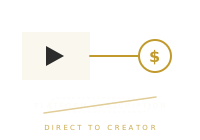
Direct to the creator who made it. No platform subscription. No paid tier to remove ads, because there are no ads to remove.
Never a forced ad.
No pre-roll, mid-roll, post-roll, or interstitial. Forever. The page where you watch is not a page where you are sold to.
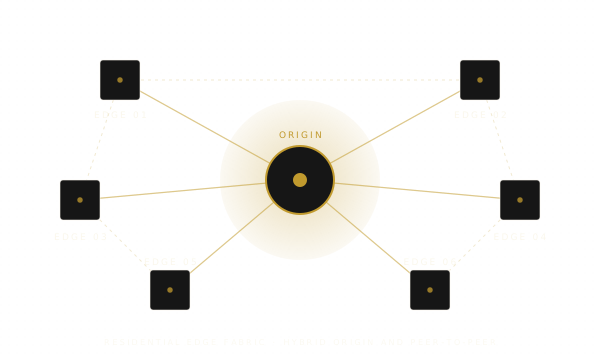
Your box could earn while it sits.
In a later phase, idle TsugiNodes could one day serve other viewers nearby and earn credits redeemable against premium content from creators you choose.
Running in homes,
on hardware you can buy.
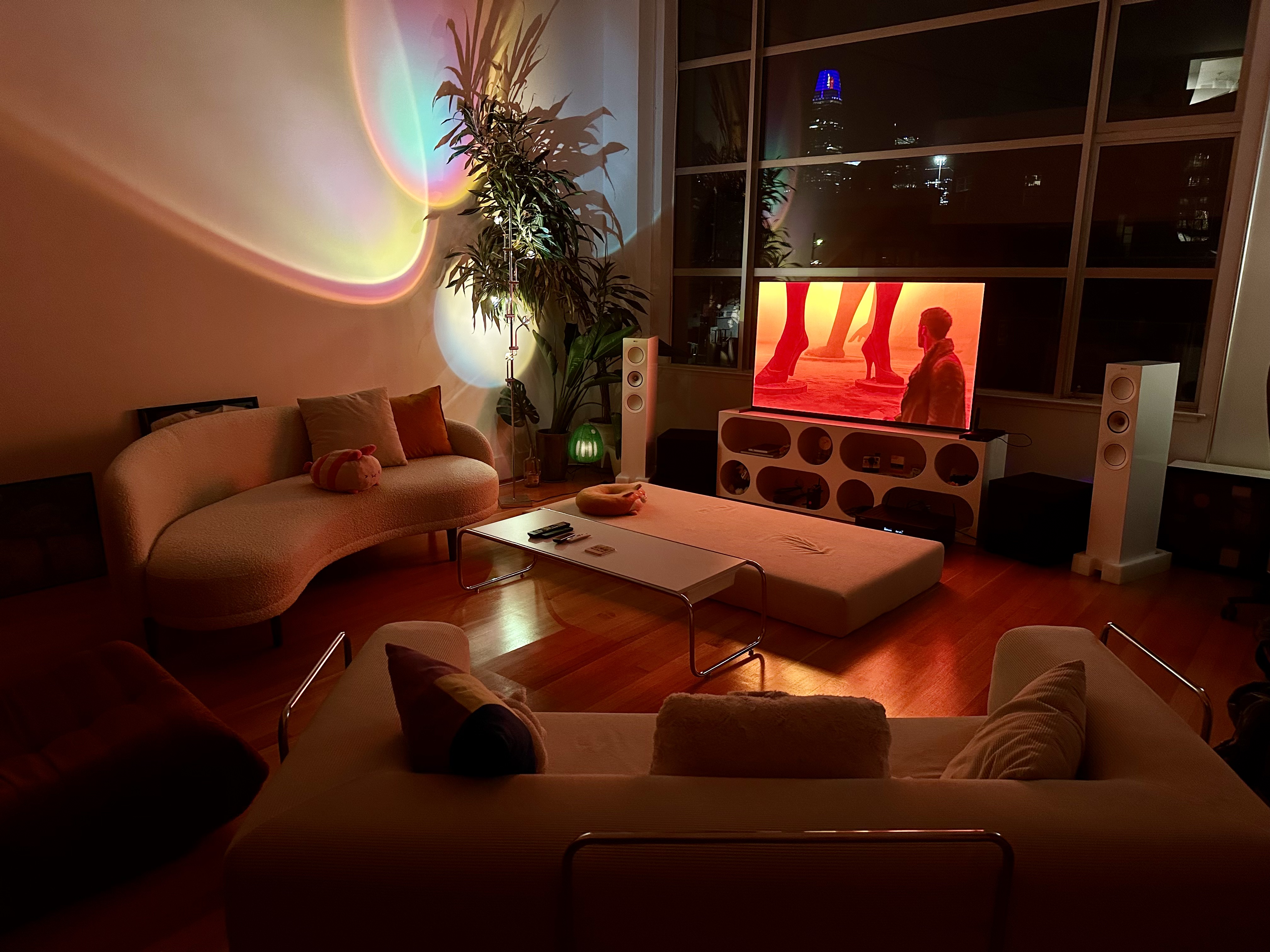
Active closed alpha program.
Master-quality 4K running on the TsugiNode in real customer homes, today. The full pipeline runs end to end on consumer silicon while you read this page.
We are not asking you to imagine this. The next addition to the cohort is the next person who joins the waitlist.
Come see it
on a real reference display.
San Francisco demo room is open by appointment. The alpha cohort is open by waitlist. Both routes lead to the same answer: see for yourself.